Carbon under control

Measured with financial-grade precision.


At Evyra FX, we support businesses in managing their international payments with precision and transparency.


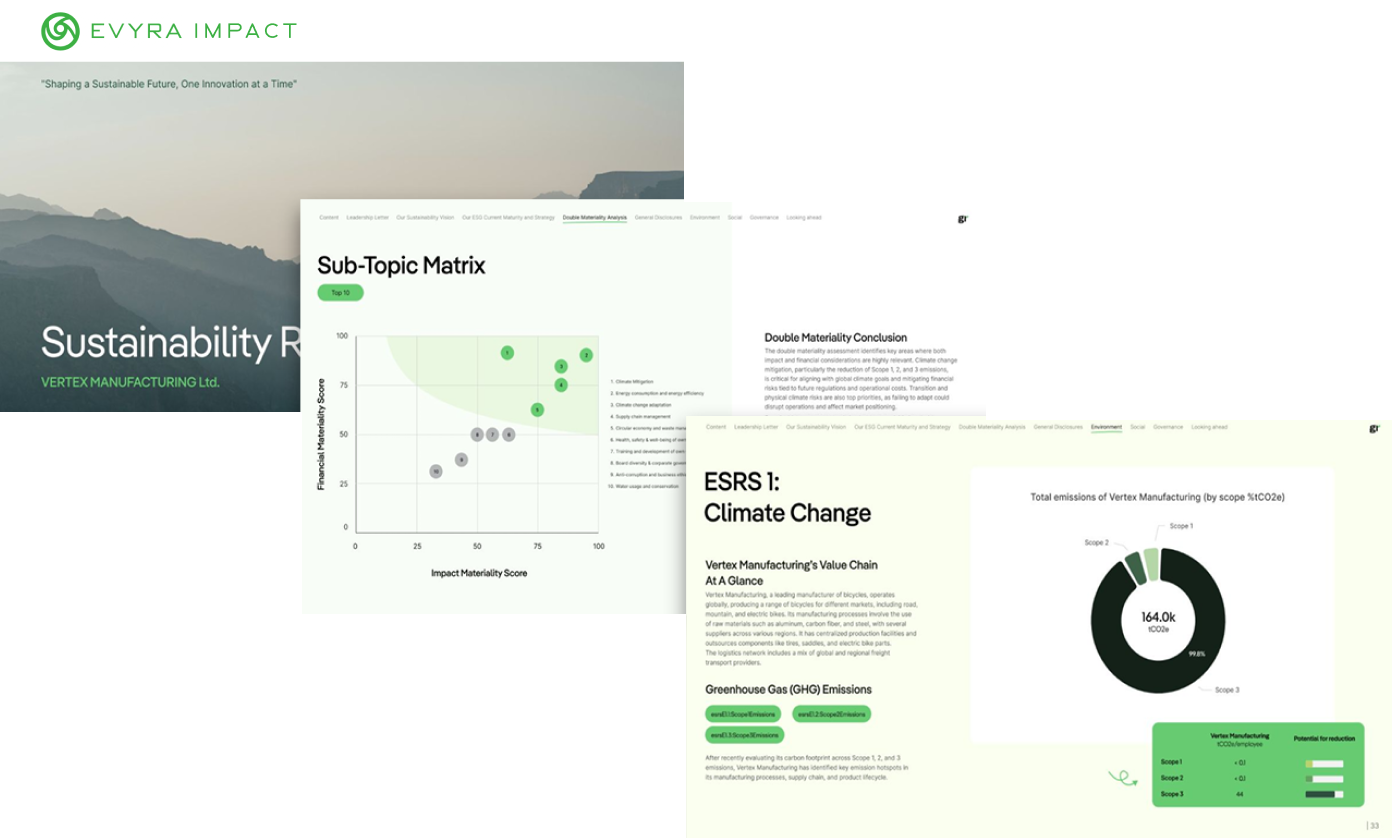
With EVYRA Impact, Evyra FX extends its offering to include a AI-powered carbon intelligence solution for carbon measurement, reduction and contribution, designed to meet growing ESG and regulatory expectations while remaining fully aligned with financial operations.


Built into the Evyra ecosystem, EVYRA Impact connects financial flows, operational data and climate performance in a single, seamless framework.

A new generation of carbon management

From insight to impact

Services Image

Carbon footprint linked to international payments

EVYRA Impact measures the carbon footprint associated with international payment flows and provides clear, periodic visibility on their environmental impact.
Services Image

Carbon footprint of business activity

EVYRA Impact measures the overall carbon footprint of a company’s operations across a defined scope, offering a structured view of business-related emissions.
Services Image

Carbon & ESG reporting

EVYRA Impact delivers professional carbon and ESG reports to support internal governance and external stakeholder requirements.

Climate Strategy

From measurement to action

A structured, reduction-first approach aligned with ESG and regulatory expectations

Measurement

EVYRA Impact captures and structures carbon data across international payments and business operations.

Reduction

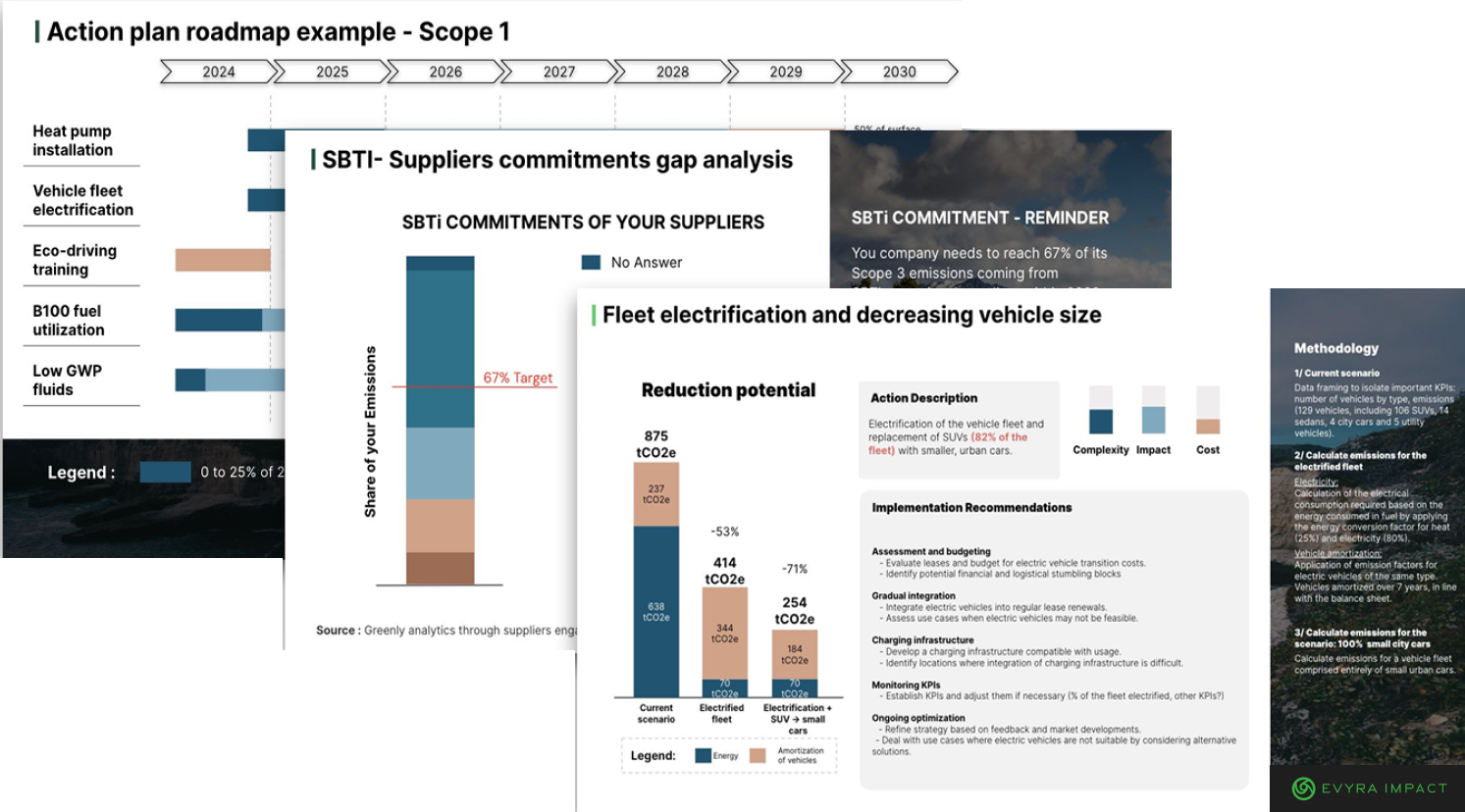
EVYRA Impact transforms carbon data into actionable insights to optimise operations and reduce emissions.

Contribution

For residual emissions, EVYRA Impact offers certified and transparent offsetting actions, aligned with CO₂ emission reduction objectives and contributing to the improvement of your company’s carbon footprint.

Frequently Asked Questions.

Explore our answers to frequently asked questions to learn more about Evyra Impact.

If you have other inquiries, don’t hesitate to contact us directly—we’re always here to assist you.

What is a carbon assessment?

A carbon assessment is the process of measuring the greenhouse gas (GHG) emissions generated by an organisation. It quantifies environmental impact using operational and financial data, in line with recognised international carbon accounting methodologies such as the GHG Protocol.

How does EVYRA Impact calculate carbon emissions?

EVYRA Impact collects relevant data (international payments and operational activity) and converts it into CO₂-equivalent emissions using standardised emission factors and recognised methodologies. Emissions are structured across Scopes 1, 2 and 3 to provide a comprehensive and consistent view.

What are Scopes 1, 2 and 3?

  • Scope 1: Direct emissions from sources owned or controlled by the company.
  • Scope 2: Indirect emissions from purchased energy (electricity, heating, cooling).
  • Scope 3: Other indirect emissions across the value chain (suppliers, travel, transport, services, etc.).

EVYRA Impact focuses in particular on Scope 3, which represents the majority of emissions for most organisations

What data is required to perform a carbon assessment?

EVYRA Impact relies on:

  • Automatically processed financial data related to international payments, and
  • Structured operational data (energy consumption, travel, purchasing, suppliers).

The solution is designed to minimise data collection effort while maintaining accuracy and traceability

How long does it take to complete a carbon assessment?

Timelines depend on the scope of analysis and data availability. Initial assessments can typically be completed within a few weeks once the required data is collected and validated.

How accurate are the results?

Calculations are based on verified operational data and performed in accordance with recognised international carbon accounting methodologies. Results are supported by expert oversight and specialised analytical tools, ensuring consistency, reliability and audit-readiness.

What is the difference between a carbon footprint and a GHG inventory?

A carbon footprint provides an overview of emissions for a defined period or activity, while a GHG inventory is a comprehensive, structured accounting of emissions across all relevant scopes. EVYRA Impact supports both approaches within a single framework.

Does EVYRA Impact only measure emissions, or does it support action as well?

EVYRA Impact goes beyond measurement by providing structured insights and reduction levers, including operational recommendations and scenario analysis to support informed decision-making.

What does “carbon contribution” mean in EVYRA Impact?

Carbon contribution refers to the voluntary support of certified climate projects to address residual emissions after reduction efforts. Contributions are transparent, documented and aligned with recognised international standards.

Are EVYRA Impact reports suitable for external use?

Yes. Reports are delivered in standard formats (PDF / Excel) and are aligned with recognised international carbon accounting standards, including GHG Protocol principles and relevant ISO guidelines where applicable. They can be used for internal governance, banking relationships, investors, tenders and ESG disclosures.

How often are reports generated?

Reports can be produced on a periodic basis (monthly, quarterly or annually) depending on reporting needs, with the ability to generate updated views as data evolves.

How does EVYRA Impact integrate with financial operations?

EVYRA Impact is embedded within the Evyra FX ecosystem. Financial data relevant to payments is processed automatically, ensuring consistency between carbon insights and financial activity, without disrupting operational workflows.

Is EVYRA Impact compliant with ESG and regulatory expectations?

EVYRA Impact is designed to align with widely recognised ESG frameworks and carbon accounting standards. While regulatory requirements vary by jurisdiction, the structure and outputs support compliance-driven reporting and due diligence processes.

Contact

Business Hours

Monday – Friday: 8 a.m. – 6 p.m.
Closed on weekends

Book a Meeting